Huaqiangbei, in Shenzhen’s Futian District, is famous as one of the world’s largest electronics markets. For a first-time visitor it can be overwhelming. With a plan, it becomes one of the fastest ways to understand the hardware supply chain.
What Huaqiangbei is
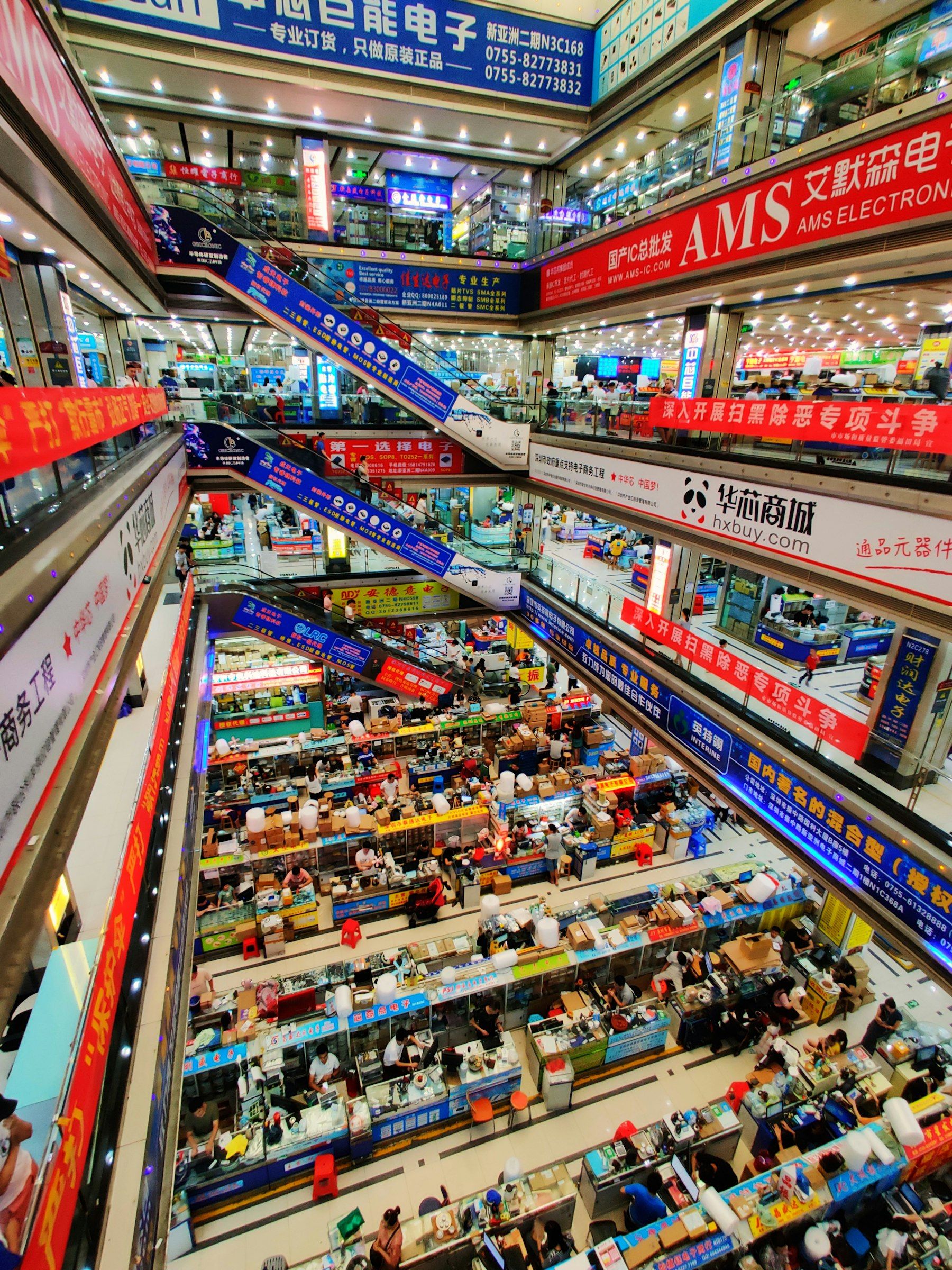
Huaqiangbei is a district of multi-storey market buildings packed with small booths selling electronic components, modules, finished devices and accessories. Many booths are fronts for trading companies or factories elsewhere in the Greater Bay Area. That is the key to using it well: the booth is often the start of a conversation, not the end of one.
How the market is organized
- By building and floor. Different buildings and floors tend to cluster around categories—components, mobile accessories, displays, LEDs, security devices and more.
- By business model. Some booths sell small quantities on the spot; others mainly take orders and arrange production.
- By relationship. Prices and terms improve with clear volumes, repeat orders and trust.
Approaching suppliers
- Bring specifications. Photos, part numbers, drawings or samples save a lot of time.
- Ask the right questions. Is this a factory or a trader? What is the minimum order quantity? What are lead times? Can you provide samples?
- Collect contacts properly. Most suppliers will want to connect on WeChat; set it up before you travel.
- Don’t decide on the spot. Compare several suppliers, then verify the shortlist with a factory visit.
From market to factory
The market tells you who makes what. The factory tells you whether they can do it reliably. A good sourcing trip combines both: a structured market walk to map options, then visits to one or two factories or specialist suppliers to check production, quality control and capacity. A professional interpreter who understands the trade makes these conversations far more productive.
Practical tips for the day
- Go on a weekday. Most booths are busiest and best staffed during working days.
- Set up mobile payments. Mobile payment apps are widely used; arrange them before you arrive and carry a backup option.
- Wear comfortable shoes. You will cover many floors and buildings.
- Keep notes and photos. Record booth numbers and product details—it is easy to lose track.
Entry: the 240-hour visa-free transit option
According to China’s National Immigration Administration, nationals of 57 countries—including the United States, the United Kingdom, Australia, Canada, Japan, South Korea and most of Europe—may use the 240-hour visa-free transit policy. Travelers need an ordinary passport and a confirmed onward ticket to a third country or region, and may stay up to 10 days within the permitted area. Business activities are allowed; work, study and news reporting still require the appropriate visa.[1]
For Shenzhen, eligible entry ports include Shenzhen Bao’an International Airport and Shekou Seaport (Passenger), and the permitted stay area for Guangdong ports is Guangdong Province.[2] In November 2025 the policy expanded to 65 ports nationwide, including West Kowloon Station of the Guangzhou–Shenzhen–Hong Kong Express Rail Link.[2][3] Rules can change—always check official sources before booking.
Make it a two-day program
Our Shenzhen Robotics Signature: supply-chain day is a standard 2-day program: Day 1 is a Huaqiangbei orientation focused on your categories; Day 2 covers factory or supplier visits with an interpreter and a wrap-up. Robotics teams can also look at our Shenzhen Robotics Signature (2 days) or read our robotics visitor’s guide.
Quick answers
Can I buy small quantities at Huaqiangbei?
Many booths sell samples or small quantities, but others mainly take orders for production. Ask about minimum order quantities first.
Is Huaqiangbei only for electronics components?
Components are the core, but you will also find modules, finished devices, accessories and displays across different buildings.
Do I need a factory visit?
For anything beyond samples, yes. A factory or supplier visit is the best way to check capacity and quality.
Sources
- National Immigration Administration — Visa-Free Transit Policies (20 Aug 2026)
- China Briefing — China 240-hour visa-free transit: eligible ports and permitted stay areas
- Shenzhen Government Online — “10 new exit-entry policies boost travel to China, ease visa-free transit rules”
Facts checked on 29 October 2026. Event and entry rules can change—please confirm with official sources.